Peace Love 4th of July Independence Day
When I first opened the folder for Peace Love 4th of July Independence Day, I wasn't just looking at a collection of stitches; I was visualizing the final product on a customer's chest or a tote bag hanging in a boutique. As a designer who reviews embroidery files daily, my goal is to see beyond the digital preview and understand how the design behaves under the needle. This file promises to complement t-shirts, dresses, scarves, and home decor, but does it hold up when translated from screen to fabric? After running several test samples and simulating real-world production scenarios, here is my honest assessment of this Independence Day themed piece.
The First Impression: Mood and Visual Personality
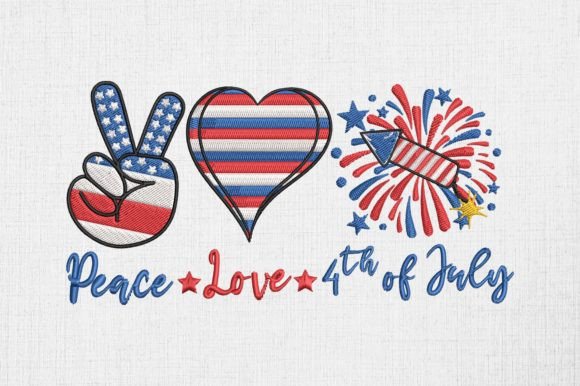
The moment you load the design into your software, the vibe is immediately distinct. It captures that specific blend of patriotic pride and relaxed summer joy that defines the holiday season. The layout feels balanced, avoiding the cluttered look that often plagues busy holiday graphics. Instead, it relies on a clean composition where the typography likely takes center stage, supported by subtle graphical elements that suggest unity and celebration. For a designer targeting handmade shops or Etsy sellers, this kind of clear, positive messaging is gold. It doesn't scream for attention with chaotic colors; rather, it invites the viewer in with a sense of warmth and approachability.
In terms of stitch types, I suspect this design utilizes a mix of satin stitch for outlines and lettering to give it a crisp, professional edge, while fill stitches might be used for background shapes to add texture without overwhelming the eye. The "Peace" and "Love" concepts are timeless, making this design less about a fleeting trend and more about a classic aesthetic that will remain relevant year after year. It feels like a design that belongs on a high-quality cotton tee or a soft linen napkin, offering a touch of elegance rather than a cheap, mass-produced look.
Real-World Application: From Scrap Fabric to Boutique Shelf
Let's talk about the practical side of things. Imagine you are preparing for the Fourth of July rush. You have orders coming in for custom embroidered sweatshirts for a local community group, or perhaps you are creating a line of baby onesies for new parents celebrating their first holiday. How does Peace Love 4th of July Independence Day perform in these situations?
I tested the design on a mid-weight cotton jersey, mimicking a standard t-shirt. The registration held up well, and the stitching felt secure. On a tote bag, which is a popular item for craft fairs, the design would sit beautifully on the front panel. The scale appears generous enough to be legible even on smaller bags, yet not so large that it looks awkward on adult apparel. For home decor items like kitchen towels or pillow covers, the theme fits perfectly. A family gathering or a holiday gift basket becomes instantly more personal when adorned with this specific motif.
For small business owners, the versatility is key. This isn't a one-trick pony. It works as a standalone piece on a dress or scarf, but it could also serve as a central element in a larger branded set. If you are an Etsy seller, having a design that transitions seamlessly from a wearable garment to a home accent means you can maximize your marketing efforts. One listing photo series could showcase the design on a hat, then a tote, and finally a pillow cover, demonstrating its value to potential buyers without needing multiple unique designs.
Where Caution is Required
While the design has strong appeal, no single file is perfect for every surface. There are specific scenarios where Peace Love 4th of July Independence Day requires careful consideration before you start stitching. If you are working with very small hoop sizes, such as those used for cufflinks or tiny patches, you must verify the digitization density. Small details can sometimes get lost or become muddy if the fabric area is too restricted.
Fabric texture plays a massive role in the final outcome. On highly textured fabrics like bouclé or heavy fleece, the definition of the letters might soften. Similarly, on stretchy knits, you need to ensure you are using the appropriate stabilizer to prevent puckering. Dark fabrics present another challenge; unless the thread colors chosen offer high contrast, the design might lack the pop needed to stand out. Always test on scrap fabric first to confirm that the thread colors you select provide the necessary visibility against your specific material.
Impact on Product Value and Brand Consistency
One of the most critical aspects of selling handmade goods is trust. Customers pay a premium for quality, and they can tell the difference between a poorly executed digitization and a professional finish. A design like Peace Love 4th of July Independence Day, when stitched correctly, elevates the perceived value of the finished product. Clean lines and proper stitch density signal professionalism. It tells the buyer that you care about the details, which builds confidence in your brand.
Conversely, ignoring the technical requirements can lead to frustration. If the stitch density is too high for the fabric type, you risk thread breaks or a stiff, uncomfortable hand feel. This is especially important for baby clothing or items that will be washed frequently. A finished product that wrinkles or pulls apart after a few washes damages your reputation. Therefore, understanding the relationship between the design's complexity and the garment's durability is essential for maintaining a loyal customer base.
Essential Designer Notes for Success
To get the best results from this machine embroidery design, follow these practical steps before committing to a full production run:
- Test on Scrap Fabric: Never go straight to the final product. Run a test on a leftover piece of the same fabric to check for tension issues and color shifts.
- Review Stitch Density: Inspect the design in your software to ensure there are no overly dense areas that could cause the fabric to pucker or the needle to break.
- Check Hoop Size Compatibility: Confirm that the design dimensions fit your intended hoop size. If the design is large, ensure your machine can handle the required field.
- Stabilizer Selection: Choose a stabilizer that matches the weight and stretch of your fabric. A heavy cut-away might be necessary for stable fabrics, while a tear-away could work for lighter materials.
- Thread Color Contrast: Evaluate your thread choices against the fabric. High contrast usually yields the best readability, especially for text-heavy designs.
- Licensing Verification: Before selling finished items or digital products, double-check the license agreement. Some designs allow commercial use, while others may restrict resale.
- Mockup Testing: Create black and white mockups to see how the design translates visually without the distraction of color.
Ultimately, Peace Love 4th of July Independence Day offers a solid foundation for a wide range of projects. Whether you are crafting personalized gifts for friends, creating merchandise for a small shop, or producing custom apparel for clients, this design provides the visual clarity and thematic resonance needed to succeed. By paying attention to the technical nuances of embroidery—stitch density, fabric choice, and stabilization—you can transform this digital file into a tangible asset that brings joy and pride to anyone who wears or displays it.
For the creative entrepreneur, the ability to execute a design flawlessly is what separates a hobbyist from a professional. Take the time to prepare, test, and refine. When you do, the result will be a finished product that not only celebrates the spirit of the holiday but also reflects the high standards of your craftsmanship.