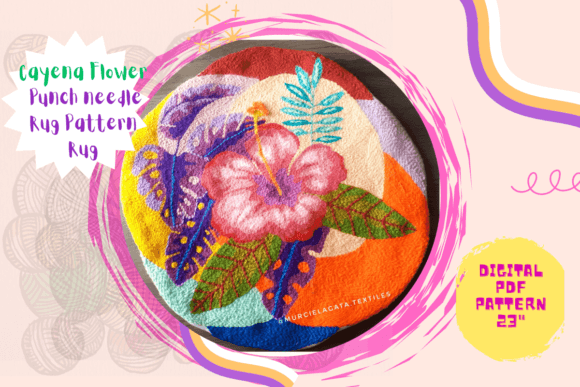
Cayena - Punch Needle Rug: A Designer's Fair Review
As an experienced embroidery designer who spends countless weekends setting up booths at local craft fairs, I know that the difference between a design that sits on the table and one that sells out is often about visual impact and practical application. When I first received the Cayena - Punch Needle Rug digital pattern to evaluate for my upcoming market season, I immediately thought about how it would translate from a screen to a physical product. The description notes that this is an inspiring pattern of the tropical Cayenne flower, native to South America and known for blooming all year round. For a handmade business owner looking to add fresh, vibrant assets to their shop, this digital embroidery file offers a compelling opportunity.
The First Impression: Bold Tropical Energy
When you look at the Cayena - Punch Needle Rug, the immediate feeling is one of warmth and organic energy. It does not feel minimal or overly corporate; instead, it screams handmade quality with a touch of rustic elegance. The concept of a punch needle style adds a textural dimension that flat machine embroidery sometimes lacks, making it perfect for items where tactile appeal matters. In a crowded craft fair booth, customers are drawn to pieces that look soft, inviting, and unique. This design fits perfectly into the modern farmhouse or bohemian aesthetic that has been dominating the Etsy seller market recently.
The tropical nature of the flower suggests a palette that is likely rich in greens, reds, and yellows. These colors are excellent for catching the eye under bright outdoor festival lights or inside a boutique window. Unlike some designs that rely heavily on tiny lettering which can get lost in photos, the floral motif of Cayena provides a strong focal point. It feels like a premium design asset that elevates the perceived value of any item it adorns.
Product Potential: Where Does Cayena Shine?
In my experience reviewing patterns for craft fair products, I always ask myself: "Where will this sell best?" The versatility of the Cayena - Punch Needle Rug makes it suitable for a wide array of handmade products. Let's break down its performance across key categories.
- Tote Bag Design: This is arguably the strongest use case. A large, colorful floral design on a canvas tote bag creates an instant statement piece. The punch needle texture adds depth that looks fantastic in person, encouraging passersby to touch the fabric.
- Apron Embroidery: For kitchen-focused markets or cooking workshops, applying this pattern to a linen apron works beautifully. It transforms a utilitarian item into a giftable piece of art.
- Tea Towel Embroidery: Kitchen towels are high-volume sellers. If the design is scaled correctly, it serves as a stunning accent on a tea towel, adding a splash of color to a home cook's space.
- Pillow Covers: The "rug" aspect of the title suggests a heavy, textured finish. This translates well to throw pillows, offering a cozy, decorative element that fits the "blooms all year round" theme.
- Embroidered Patch: With proper backing, this could be cut out and sold as a standalone patch for denim jackets or bags, appealing to younger demographics looking for custom accessories.
For the small shop product owner, having a design that works across such diverse inventory—from market bags to pillow covers—is crucial for efficiency. It allows you to create a cohesive collection without needing multiple unrelated designs.
Practical Selling and Production Realities
While the aesthetic potential is high, a professional must consider the logistics of production. How easy is the Cayena - Punch Needle Rug to execute? The description highlights its suitability for various projects, but the devil is in the details. When preparing your booth display, you need to ensure the design photographs well for your online listings and printable mockups. A design that looks great in 3D might lose definition if the stitch density is too low or if the thread colors clash with the background fabric.
One of the biggest advantages of this design for batch production is its repeatability. Floral motifs tend to be forgiving; slight variations in tension or fabric grain are less noticeable than they would be with geometric lines or complex typography. This makes it ideal for creating a set of matching items, such as a set of three tea towels or a group of tote bags, which often sell better as bundles.
However, there are specific areas where caution is required. If the design features dense stitch areas, you must ensure your hoop size can accommodate the necessary stabilizer without distorting the fabric. Thick fabrics, like heavy canvas for tote bags, require robust stabilization techniques to prevent puckering. Similarly, if you plan to use this on curved surfaces like caps, the curvature might flatten the intended texture of the punch needle style, potentially reducing the visual impact.
Crucial Considerations for Commercial Success
Before committing to a full run of commercial embroidery products, there are several technical checks every designer should perform. First, test the design on scrap fabric that matches your final product material. This step is non-negotiable for checking thread contrast and ensuring the stitch density is appropriate for the chosen thread count.
You must also review the spacing carefully. A design that looks balanced on a computer screen might look cramped when embroidered on a small pouch or spread too thin on a large pillow cover. Confirm the hoop size requirements early to avoid resizing issues that could alter the proportions of the flower. Furthermore, inspect the stitch density closely; while punch needle styles are naturally textured, excessive density can make the fabric stiff and difficult to sew onto garments or accessories.
Another vital note concerns the clarity of the design at smaller sizes. While the tropical flower is detailed, very fine lines may disappear when stitched on a dark fabric or a small item like a cap. Always compare fabric colors against the thread palette to ensure the design pops. If the design relies on subtle shading, it might struggle on a dark background unless you have access to high-contrast thread options.
Maximizing Visual Appeal and Brand Consistency
The ultimate goal of any embroidery designer at a craft fair is to create a booth that tells a story. The Cayena - Punch Needle Rug supports a narrative of natural beauty and year-round growth. By using this design consistently across your design assets, you build brand recognition. Customers who love the vibrant flower on a tote bag are more likely to trust your other products, such as the embroidered patches or aprons featuring the same motif.
This design enhances buyer engagement because it appeals to the desire for something unique and handcrafted. In a world of mass-produced goods, the texture implied by the punch needle style signals quality. It invites the customer to imagine the item in their own home, whether it is a decorative pillow on a sofa or a sturdy tote bag for farmers market trips.
To finalize your preparation, remember to create at least one real mockup before launching your Etsy listing or printing promotional materials. Digital images are powerful, but nothing sells a handmade product quite like a photo of the actual finished item. Additionally, confirm your commercial licensing terms. Ensure you have the right to sell finished goods made from this Hand Embroidery Patterns graphic, as this protects your business and gives you peace of mind.
If the file format, exact stitch count, or specific license terms are not clearly listed in the initial product details, do not assume. Reach out to the creator or check the documentation thoroughly. Missing these details can lead to production headaches or legal issues later. But assuming the technical specs align with your workflow, the Cayena - Punch Needle Rug stands out as a versatile, visually striking choice for any creative entrepreneur looking to expand their graphics library with a design that truly blooms.